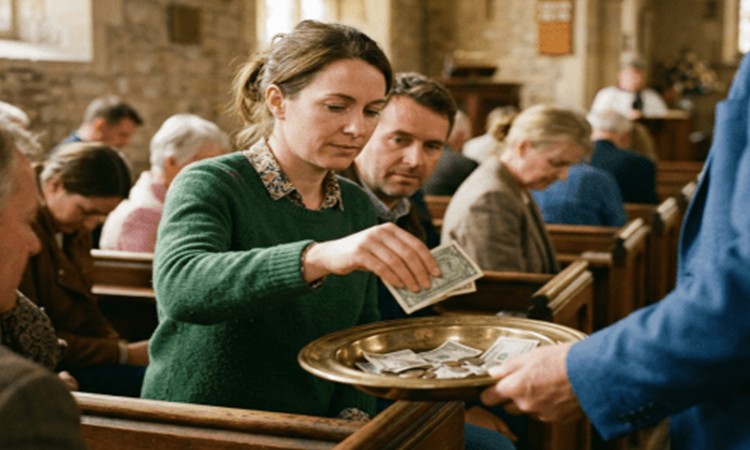
Tithing is giving a portion of your income to the church, and it has been a tradition in many religious communities for a long time. Many people see it as a moral duty and a command from God. But do Christians today still have to pay tithes?
Looking more closely, some people question whether tithing is truly required for Christians today. Well-known leaders like Billy Graham have influenced how people think about this, so it’s important to consider both sides of the debate.
The Biblical Foundation of Tithing
The practice of tithing dates back to the Old Testament, where Israelites were ordered to give 10 percent of their harvests and animals to support the Levites, the priestly class.
Key verses such as Malachi 3:10 NIV command believers to “bring the whole tithe into the storehouse.” Because of these scriptures, many churches believe tithing is not just generous but a duty for Christians.
However, some critics say people often overlook the context of these verses. They point out that the rule was meant for the ancient Israelites and their agreement with God.
After Jesus Christ and the New Covenant, many believe that these Old Testament rules no longer apply. This raises the question: Is tithing wrong, or is it just a misunderstanding of what the Bible teaches?
The New Testament Perspective
The New Testament talks about giving money in a different way. Jesus focuses more on generosity than on strict rules about how much to give.
In 2 Corinthians 9:7, Paul writes, “Each of you should give what you have decided in your heart to give, not reluctantly or under compulsion, for God loves a cheerful giver.”
This view suggests that giving should be a choice, motivated by love for God, not by a set 10% rule.
Billy Graham, a well-known evangelist, shared similar ideas during his ministry. He often said that giving should come from love, not from a sense of obligation. He taught that what matters most is the reason and attitude behind our giving, not the amount or percentage. This is different from the traditional view of tithing.
The Consequences of Misguided Tithing
Many churches say tithing brings financial blessings and helps people grow spiritually. But this message can sometimes make people feel guilty or pressured, leading them to give out of fear rather than out of faith.
Some people may struggle financially and feel pressured to give a tithe that does not match their real situation.
Also, thinking that giving money brings spiritual favor can harm a person’s relationship with God. The idea that God’s favor depends on our giving goes against the idea of grace, which is a free gift from God, not something we earn.
The Emerging Narrative
Recently, some churches and theologians have started to rethink tithing. They suggest a more thoughtful approach that focuses on being good stewards and giving responsibly, instead of sticking to strict percentages.
This view encourages people to think about their own finances and to give generously, without feeling tied to a specific amount.
More churches are also becoming open about how they use money. By sharing this information, they can build trust with members and encourage people to give because they truly support the church’s mission, not just out of duty.
Conclusion
As people think about the challenges of tithing, it’s important to remember that giving should come from love and thankfulness.
Even though many churches still hold traditional views on tithing, more people are discussing a broader approach to money and giving. In the end, understanding true generosity may matter more than following a strict rule.
The question of tithing, whether it is seen as a sin or not, opens up a bigger conversation about faith, money, and why we give in today’s church.