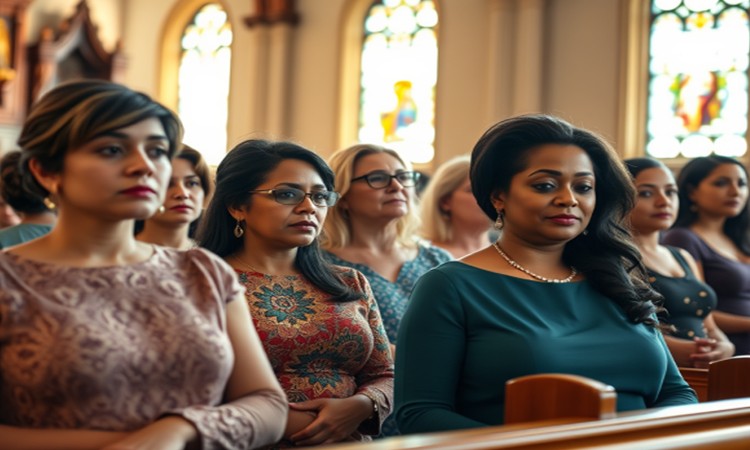
The role of women in the Church has been widely discussed and debated. Hence the title of this article is the role of women in the church: a biblical perspective.
The Bible presents diverse examples of women serving God and faith communities.
Understanding these roles can deepen our appreciation for women’s contributions and foster a more inclusive church environment.
1. Biblical Foundation
Scripture highlights the important role of women in God’s redemptive plan. Genesis affirms that women are created in God’s image, reflecting His character and authority equally with men (Genesis 1:27).
This truth affirms the inherent value and capacity of women to serve meaningfully.
Throughout the Old Testament, women like Miriam, Deborah, and Esther demonstrate leadership, wisdom, and courage. Miriam, Moses’ sister, served as a prophetess and led the Israelites in worship (Exodus 15:20-21).
Deborah was a judge and military leader who guided Israel through a critical time in their history (Judges 4-5). Esther’s bravery in advocating for her people highlights the impact a woman can have when she acts with faith and courage.
2. Jesus’ Affirmation of Women
In the New Testament, Jesus affirms and elevates the status of women. He breaks cultural norms by engaging with women, teaching them, and valuing their contributions.
Followers such as Mary Magdalene, Joanna, and Susanna supported His ministry and were among the first witnesses to His resurrection (Luke 8:1-3, John 20:11-18).
By appearing first to women after His resurrection, Jesus affirmed their importance within the community of believers. This established women as vital witnesses in the foundation of the Christian faith.
3. Women in Early Church Leadership
The early Church recognized and supported women’s roles in ministry. Acts highlights Lydia, the first European convert, who hosted Paul and his companions (Acts 16:14-15).
Phoebe is described as a deacon in Cenchreae, indicating a leadership role (Romans 16:1-2). Junia is noted as “outstanding among the apostles” (Romans 16:7), showing that women held significant positions in the early Christian community.
4. Paul’s Teachings on Women
The Apostle Paul is frequently referenced in discussions about women’s roles in the Church. While some passages appear restrictive (e.g., 1 Timothy 2:11-12), a closer look reveals a more nuanced context.
In Galatians 3:28, Paul states, “There is neither Jew nor Gentile, neither slave nor free, nor is there male and female, for you are all one in Christ Jesus.” This verse highlights the Gospel’s egalitarian message, inviting all to participate fully in faith.
5. Contemporary Application
In the modern Church, it is essential to recognize and encourage women’s active participation in all areas of ministry.
Churches that embrace women’s diverse gifts and callings build vibrant communities that reflect God’s design. Women can serve as pastors, teachers, evangelists, missionaries, and leaders. Limiting their roles restricts God’s work in the Church.
Conclusion
Historical context and biblical evidence affirm that women have played and continue to play an integral role in the Church.
By drawing on these examples, we can foster a church culture that values women’s contributions, creating a more inclusive and dynamic faith community.
Recognizing the legacy of women in Scripture inspires all believers to engage fully in their callings, promoting unity and growth within the body of Christ.
by: Staff
 Christian Briefs