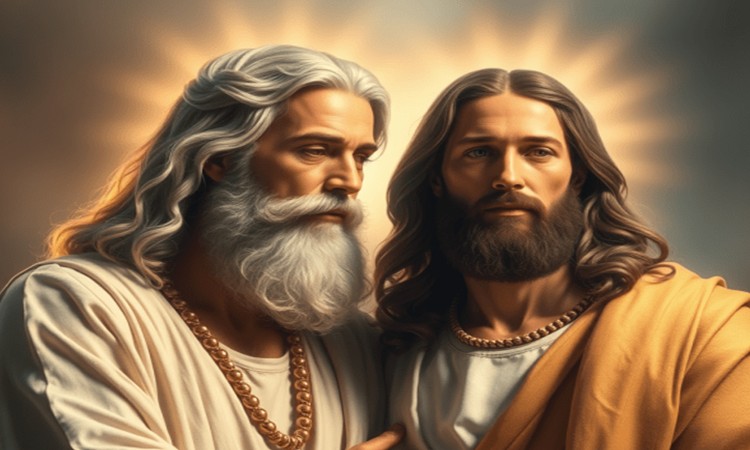
The relationship between Jesus Christ and God the Father has been a subject of theological exploration and debate for centuries. In Christian doctrine, Jesus is often referred to as the Son of God and is understood to have a unique relationship with the Father.
Exploring the Relationship Between Jesus and God is explained in this article. This raises a profound question: if Jesus is indeed God, how can He sit at the right hand of God (Colossians 3:1)? To unpack this, we need to take a closer look at the concepts of the Trinity, spirit, and ascension.
The Doctrine of the Trinity
At the heart of Christian belief is the doctrine of the Trinity, which defines God as one being in three coeternal and consubstantial persons: the Father, the Son, and the Holy Spirit. Each person of the Trinity is fully God, yet distinct from the others.
This relationship can seem complex, but it is foundational for understanding how Jesus can be both divine and yet occupy a distinct role within the Godhead.
In this framework, Jesus, as the Son, shares the same divine essence as God the Father. This means that they are of one spirit and substance, affirming that Jesus is fully God. However, the distinct roles of the Father and the Son highlight a relational dynamic that does not undermine their oneness.
The Ascension of Jesus
To understand how Jesus can sit at the right hand of God, we must consider the event known as the Ascension. After His resurrection, Jesus ascended into heaven, where He is said to be seated at the right hand of the Father.
In biblical terms, this position signifies authority and honor. It indicates that Jesus, while still embodying the divine nature, has taken on a distinct role in the heavenly realm.
In Ephesians 1:20-21, Paul writes about God raising Christ from the dead and seating Him at His right hand in the heavenly places, far above all rule and authority. This passage illustrates that Jesus holds a position of power and intercession on behalf of humanity, fulfilling His mission as the mediator between God and man.
Theological Interpretations
Various theological interpretations seek to explain the relationship between Jesus and God, particularly regarding their roles in the redemption of humanity. Many theologians argue that Jesus’ distinctively sitting at the right hand underscores His role as the exalted Son, who serves as an intercessor for believers.
From this perspective, Jesus is not merely representing a physical location but rather signifies His divine authority and His active involvement in the ongoing work of redemption. This position allows believers to approach God with confidence, as Jesus intercedes on their behalf.
The Concept of One Spirit
When discussing Jesus as God and the idea of one spirit, it is essential to recognize the nuances of the term “spirit.” In Christian theology, the Holy Spirit is also a member of the Trinity, coequal with the Father and the Son. The phrase “one spirit” can refer to the unity that exists within the Trinity. Though distinct in personhood, the three persons operate in perfect harmony and unity.
Understanding this clarifies how Jesus, though fully divine, can also fulfill His distinct role as the Son who sits at the right hand of the Father. Each person of the Trinity has specific functions that contribute to the divine plan, yet they are unified in essence and purpose.
Conclusion
The theological inquiry into the relationship between Jesus and God the Father enriches our understanding of God’s nature and the mystery of the Trinity. While it can be challenging to comprehend how Jesus can be God and yet sit at the right hand of God, this concept is rooted in the rich tradition of Christian doctrine that emphasizes both the unity and distinctiveness of the Trinity.
As believers navigate these profound mysteries, they are reminded of the grace and love that God extends through Jesus, elevated at His right hand, forever interceding for humanity. Ultimately, this relationship reflects the depth of God’s love and desire for a personal connection with each person.
by: Staff
 Christian Briefs